Printable Bookmarks for Artists: Integrating Vintage Aesthetics into Modern Creative Projects
The intersection of historical design and contemporary digital crafting offers a unique opportunity for creators to infuse their work with authentic character. For artists, journalers, and stationery enthusiasts, the search for distinctive ephemera often leads to printable bookmarks for artists that bridge the gap between antique charm and modern utility. This specific collection of digital assets draws directly from two significant historical sources: a vintage artist’s supply catalog and a French printer’s sample book dating back to the 1900s. By utilizing high-resolution scans of these original materials, designers can access a level of texture and typographic detail that is difficult to replicate through synthetic digital generation.
Understanding the provenance and technical specifications of these printable resources is essential for maximizing their potential. Unlike generic clip art, these images carry the weight of printing history. The French printer’s samples provide a glimpse into early 20th-century color theory and layout techniques, while the artist supply catalogs showcase the tools of the trade as they appeared over a century ago. When incorporated into current projects, these elements serve not merely as decoration but as a tangible connection to artistic heritage. Whether used in traditional bookbinding, junk journaling, or digital planning, the versatility of these files allows for extensive customization across various mediums.
Historical Provenance and Visual Authenticity
The primary value proposition of this digital collection lies in its source material. In an era where AI-generated imagery often lacks specific historical accuracy, using scans from actual period documents ensures authenticity. The inclusion of imagery from a 1900s French printers sample book introduces a sophisticated European aesthetic characterized by muted tones, intricate borders, and classic serif typography. These samples were originally created to demonstrate print quality and color fidelity to prospective clients, meaning they were designed to be visually striking and technically precise.
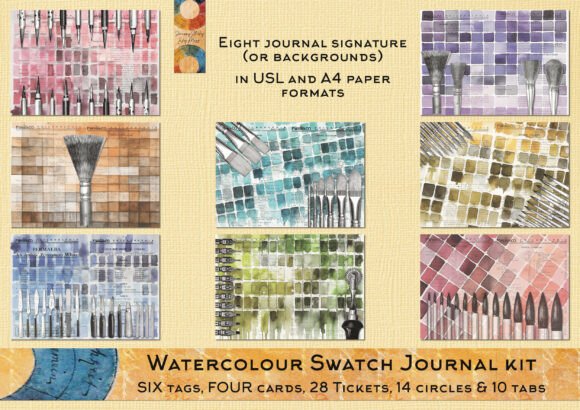
Complementing the French samples are illustrations from a vintage artist’s supply catalog. These images depict paint tubes, brushes, bottles, and other studio essentials with a realism that reflects the manufacturing standards of the time. For professionals and educators, this distinction matters. Using accurate historical representations of art supplies can enhance the narrative quality of a project, particularly when creating content related to art history, restoration, or traditional craftsmanship. The textures captured in these PNG and JPG files—including paper grain, ink bleed, and age-related patina—provide a tactile visual experience that flat vector graphics cannot achieve.
Technical Specifications and File Formats
Navigating the technical aspects of digital downloads is crucial for achieving professional results. This collection is supplied in both PNG and JPG formats, each serving distinct purposes in the creative workflow. PNG files typically offer superior quality for printing due to lossless compression, preserving the fine details of the vintage scans and supporting transparency if the backgrounds have been isolated. JPG files, while compressed, are often more manageable for digital-only projects or quick mock-ups where file size is a concern.
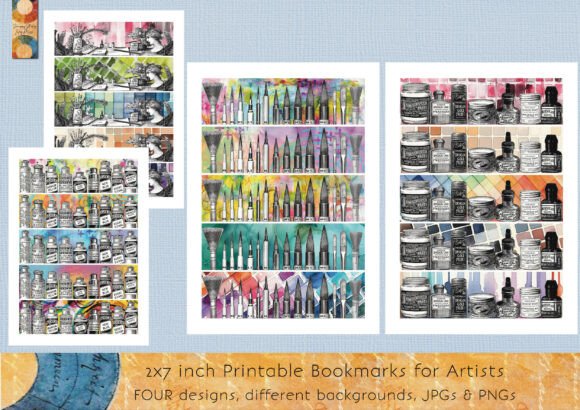
The package includes four distinct sheets featuring varied compositions of bottles, brushes, paint tubes, and printer samples. Crucially, each sheet is provided in both A4 and US Letter sizes. This dual-format approach eliminates the need for manual resizing or tiling before printing, ensuring that the aspect ratio remains correct regardless of regional paper standards. Users should note that because this is a digital download, no physical product is shipped. Accessing the files requires unzipping the folder; while most modern operating systems handle this automatically, free third-party software is readily available online for those whose systems do not support native extraction.
Dimensional Flexibility and Customization Strategies
While the default dimensions for these printable bookmarks for artists are set at 2x7 inches, rigid adherence to this size is unnecessary. The composition of the vintage artwork allows for significant trimming without compromising the integrity of the design. Reducing the length to 2x6 inches is a common modification that aligns with standard commercial bookmark sizes. Furthermore, rounding the corners after trimming can soften the aesthetic, making the bookmark feel more finished and durable against daily wear.
This adaptability extends beyond simple resizing. Because the background elements are derived from comprehensive kits, users have the freedom to crop specific focal points. A section featuring a single ornate brush or a detailed color swatch from the French sample book can be isolated to create mini-tags or gift labels. This modular approach encourages experimentation, allowing creators to tailor the scale of the imagery to fit pockets, planners, or small-format books where a full-length bookmark might be cumbersome.
Beyond Bookmarks: Alternative Applications
Limiting these assets strictly to bookmarks overlooks their broader utility in mixed media and stationery design. The vertical orientation and rich detailing make them ideal candidates for conversion into belly bands. By attaching the printed strip to a longer piece of cardstock or ribbon, it can wrap around a journal or notebook cover, serving as a decorative closure or title label. This application is particularly effective for handmade journals where custom branding is desired.
Additionally, adhering the bookmark image to a larger rectangular card transforms it into a journaling card. This technique adds depth and layering to scrapbook pages or planner spreads without requiring complex collage skills. For junk journal enthusiasts, these prints serve as excellent "tuck-ins"—loose elements tucked into pockets or behind flaps to add surprise and interactivity. The vintage nature of the imagery pairs naturally with tea-stained papers, lace, and other ephemera commonly used in this genre, creating a cohesive visual language throughout the book.
Ecosystem Integration and Workflow Enhancement
Creative efficiency often depends on how well different assets work together. It is worth noting that many backgrounds featured in this bookmark collection originate from other kits available on Creative Fabrica, suggesting a coordinated design ecosystem. More significantly, the specific artist supply images included here are also available as a brush set for Affinity software. This cross-compatibility bridges the divide between physical crafting and digital illustration.
For digital artists using Affinity Photo or Designer, having matching brushes means they can extend the vintage aesthetic beyond the static bookmark. They can paint additional elements that perfectly match the scanned artifacts, creating seamless hybrid compositions. Conversely, traditional artists who digitize their work can use the printable bookmarks as reference material or texture overlays. This synergy between digital tools and printable assets maximizes the return on investment for creators who operate across multiple platforms.
Practical Considerations for Printing and Assembly
Achieving optimal results with printable bookmarks for artists requires attention to material selection. While the files are optimized for clarity, the final output is heavily dependent on paper choice. For a truly authentic vintage feel, printing on uncoated cardstock, kraft paper, or watercolor paper is recommended. Glossy papers tend to reflect light and obscure the subtle textures of the original scans, diminishing the antique effect. Matte or satin finishes generally preserve the depth of the aged ink and paper grain.
Durability is another practical consideration. Since bookmarks are handled frequently, laminating the printed sheets or using self-adhesive laminating pouches can significantly extend their lifespan. Alternatively, applying a spray fixative can protect the ink from smudging while maintaining a more natural paper texture. For those using the bookmarks as belly bands or journal cards, scoring the fold lines before bending prevents cracking in the paper fibers, ensuring a crisp, professional finish. Understanding these assembly nuances ensures that the digital download translates successfully into a functional, beautiful physical object.
The Role of Vintage Ephemera in Contemporary Design
The enduring popularity of resources like these printable bookmarks speaks to a larger trend in the creative community: the desire for tangible history in a digital world. As screens dominate our daily lives, there is a counter-movement toward analog aesthetics that evoke nostalgia and craftsmanship. Using genuine historical sources rather than modern interpretations satisfies this craving for authenticity. It allows hobbyists, educators, and business owners to create products and personal projects that feel grounded and substantial.
Furthermore, these assets democratize access to rare archival materials. Original French printer sample books and vintage art catalogs are often expensive collector's items, inaccessible to the average crafter. Digitizing and adapting these resources preserves their legacy while making them usable for modern applications. Whether one is designing a product line for an Etsy shop, teaching a class on art history, or simply enhancing a personal diary, these printable elements provide a versatile foundation. They represent a fusion of past and present, proving that historical design continues to hold relevance and inspiration for today’s diverse community of makers.