Hand Drawn Art Tools SVG: Integrating Bold Vector Assets into Professional Workflows
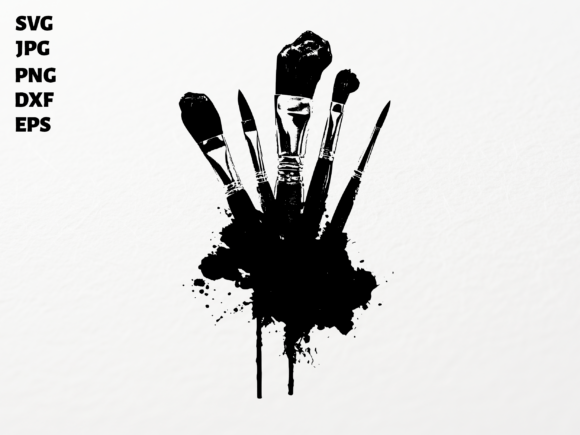
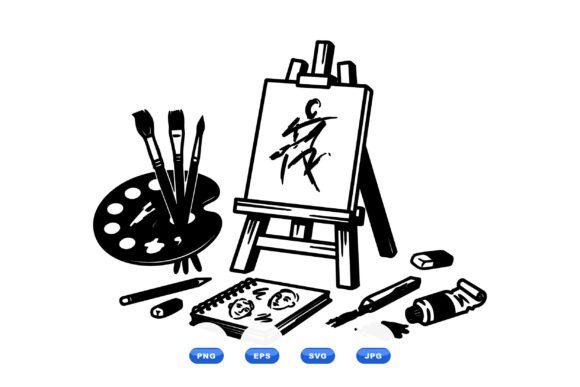
In the landscape of digital design and content creation, the demand for authentic, organic visuals often clashes with the technical requirements of modern publishing. The Hand Drawn Art Tools SVG collection bridges this gap by providing a bold ink brush line art composition that retains the spontaneity of traditional media while offering the precision of vector graphics. This asset set, featuring an easel, palette, brushes, sketchbook, and paint tube rendered in high contrast, serves as more than just decoration; it is a functional component in editorial layouts, branding systems, and digital interfaces. Understanding how to leverage these scalable files effectively requires looking beyond the aesthetic and examining their role in pre-production planning, active design execution, and long-term asset management.
The Strategic Value of High-Contrast Vector Art
Before integrating any graphical element into a project, professionals must evaluate its versatility and technical viability. The Hand Drawn Art Tools SVG distinguishes itself through high-contrast rendering. In practical terms, this means the artwork relies on solid black-and-white relationships rather than gradients or subtle shading. For marketers and publishers, this characteristic is crucial for accessibility and reproduction quality. High-contrast vectors maintain legibility when scaled down for mobile icons or blown up for large-format print signage without suffering from pixelation or blurring.
This specific composition targets creative niches but applies broadly across industries. An educational platform might use the sketchbook and brush elements to denote course modules, while a freelance portfolio could utilize the easel icon as a primary avatar. Because the files are fully scalable vectors with sharp contours, they eliminate the common friction point of sourcing raster images that degrade upon resizing. The inclusion of EPS, PNG, and JPG formats alongside the master SVG ensures compatibility across every stage of the production pipeline, from initial mood boarding in presentation software to final output in professional layout applications.
Pre-Production: Planning and Asset Preparation
Effective implementation begins before opening design software. When downloading the ZIP package, organization is the first step toward workflow efficiency. Rather than leaving files in a generic "Downloads" folder, integrate them immediately into your project’s asset library or digital asset management (DAM) system. Tagging the Hand Drawn Art Tools SVG with metadata such as "editorial," "art-supplies," "line-art," and "branding" saves significant time during future retrieval. For teams working in shared environments, establishing a naming convention that reflects the file format and intended use case prevents version control issues.
During the conceptual phase, these assets serve as rapid prototyping tools. Because the set includes distinct elements like the palette and paint tube, designers can mix and match components to create custom composite illustrations without starting from scratch. This modularity supports agile workflows where stakeholders need to visualize concepts quickly. Instead of spending hours sketching a new icon set for a pitch deck, you can deploy these clean vector files to establish visual tone and direction. This allows the team to validate the artistic style before committing resources to bespoke illustration work.
Execution: Technical Integration Across Platforms
The true utility of the Hand Drawn Art Tools SVG emerges during the active creation phase. Different platforms require different handling of vector data, and understanding these nuances ensures consistent quality.
Web and Digital Interface Implementation
For web developers and UI designers, the SVG format is the primary deliverable. Unlike raster images, SVGs are code-based, allowing for direct manipulation within CSS and JavaScript. You can animate the brush strokes, change the fill color dynamically based on user interaction, or optimize the file size by removing unnecessary metadata. When using this bold ink brush composition for websites, ensure the viewBox attribute is correctly defined to prevent cropping. The high-contrast nature of the art makes it ideal for dark mode toggles; a simple CSS filter or class swap can invert the colors seamlessly without requiring a separate file upload.
Print and Editorial Layouts
In print workflows, the EPS format often takes precedence due to its robust support in Adobe InDesign and Illustrator. While SVG is gaining traction in print, EPS remains the industry standard for commercial printing and packaging. The sharp contours of this hand-drawn set translate exceptionally well to spot color printing and risograph processes, where color separation is manual and distinct. Editors can place the PNG version for quick mockups in Word or PowerPoint documents during the review process, then swap in the high-resolution vector file for the final press run. This hybrid approach maintains speed during drafting while guaranteeing professional output quality.
Branding and Identity Systems
Brand designers will appreciate the cohesive stylistic language of the set. Consistency is paramount in identity work. Using the Hand Drawn Art Tools SVG as part of a larger brand kit ensures that all art-related iconography shares the same stroke weight, texture, and visual density. When expanding the brand later, these files serve as a style reference for commissioning additional custom illustrations. The bold line art style communicates creativity and craftsmanship, making it suitable for artisanal brands, art supply retailers, and creative agencies. By anchoring the visual identity with these versatile vectors, businesses maintain a recognizable aesthetic across business cards, social media templates, and merchandise.
Workflow Compatibility and Tool Interaction
No asset exists in a vacuum. The Hand Drawn Art Tools SVG is designed to interact smoothly with standard industry software. In Adobe Illustrator or Affinity Designer, the vector paths are editable, allowing you to adjust anchor points, simplify curves, or combine shapes to fit specific layout constraints. For users of Figma or Sketch, importing the SVG preserves layers, enabling non-destructive editing within the interface design environment.
For those working in video production or motion graphics, the separated elements (easel, palette, brushes) facilitate rigging and animation. Importing the AI or EPS file into After Effects allows each tool to be treated as an independent layer. This interoperability reduces the need for redrawing assets specifically for motion projects. Similarly, educators creating e-learning content in Articulate Storyline or Canva can utilize the PNG exports for drag-and-drop simplicity while retaining the option to upgrade to vector formats if the project scope expands to print materials.
Quality Control and Long-Term Usability
Maintaining quality over time requires attention to detail. When scaling the Hand Drawn Art Tools SVG, always verify that stroke widths remain proportional. Some vector editors offer options to scale strokes automatically; disabling this feature can sometimes result in lines becoming too thick or too thin relative to the new size. Testing the artwork at both minimum and maximum intended sizes is a necessary quality assurance step. Additionally, check for open paths or stray points that might cause rendering artifacts in certain browsers or RIP software.
Licensing and usage rights also play a role in long-term viability. Ensure that the acquisition of this downloadable ZIP package aligns with your commercial needs. Keeping the original license documentation alongside the asset files protects against future compliance audits. From a sustainability perspective, investing in high-quality, multi-format vector sets reduces the carbon footprint associated with repeatedly searching for, downloading, and discarding low-quality stock imagery. A well-maintained library of versatile assets like this hand-drawn composition becomes a compounding resource, accelerating future projects and maintaining visual consistency across years of work.
Practical Tips for Maximizing Asset Value
- Create Variations Early: Upon first import, create saved versions with different stroke weights and color palettes. Having pre-adapted variants ready speeds up future decision-making.
- Optimize for Web: Run SVG files through optimization tools like SVGO to strip editor metadata and reduce file size before deploying to production websites.
- Document Usage Guidelines: If working in a team, create a brief style guide specifying which format to use for which medium to prevent colleagues from placing low-res JPGs in print layouts.
- Combine with Typography: The bold, organic lines of this art pair best with clean sans-serif or structured serif typefaces. Avoid overly decorative fonts that compete with the intricate brush textures.
- Leverage Negative Space: The high-contrast design relies heavily on white space. When placing these elements, allow adequate breathing room to preserve the impact of the ink brush lines.
Integrating the Hand Drawn Art Tools SVG into your professional repertoire is an exercise in balancing artistic expression with technical discipline. By treating these files as modular, scalable components rather than static images, creators can streamline their workflows, enhance cross-platform consistency, and elevate the perceived quality of their output. Whether used for a quick blog header or a comprehensive rebranding campaign, the preparation and execution strategies outlined here ensure that this bold ink brush composition delivers tangible value throughout the entire lifecycle of your creative projects.