Bold - Easy Inspirational Coloring Pages: Evaluating Fit, Format, and Creative Utility
When selecting digital assets for adult coloring, the market is often saturated with intricate mandalas and hyper-detailed landscapes that demand significant time investment and visual acuity. For creators, educators, and individuals seeking mindfulness without cognitive overload, Bold - Easy Inspirational Coloring Pages represents a distinct category shift. This collection, specifically exemplified by The Bold and Easy Cosmetics Coloring Book for Adults, prioritizes accessibility and aesthetic clarity over complexity. Understanding where this style fits within the broader landscape of printable art requires evaluating its specific design philosophy against traditional alternatives, technical specifications, and practical use cases.
Defining the "Bold and Easy" Aesthetic Versus Traditional Complexity
The primary differentiator of this collection is the deliberate simplification of line work. Traditional adult coloring books often feature line weights under 0.5pt with dense hatching and microscopic details intended to mimic engraving or etching. While impressive, these designs can induce stress rather than alleviate it, particularly for users with vision impairments, motor skill limitations, or limited attention spans.
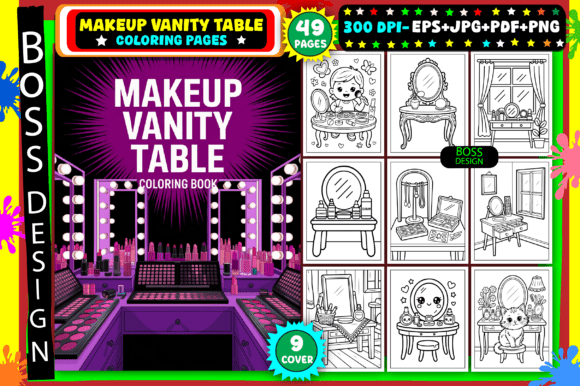
In contrast, Bold - Easy Inspirational Coloring Pages utilize thicker, cleaner outlines with open negative space. The cosmetics-themed set illustrates this approach through 44 illustrations of lipsticks, eyeshadow palettes, brushes, and skincare essentials. The subject matter remains sophisticated and fashionable, avoiding the juvenile aesthetic sometimes associated with simple coloring pages. However, the execution removes the barrier to entry. This makes the resource distinct from standard "easy" coloring books, which often sacrifice style for simplicity. Here, the bold lines serve a dual purpose: they are visually striking when colored with markers or gel pens, and they provide clear boundaries that reduce the anxiety of "coloring outside the lines."
Evaluating Technical Specifications for Multi-Platform Use
For digital product sellers, teachers, or hobbyists who modify files, resolution and format variety are critical decision factors. Many downloadable coloring resources are provided solely as flattened JPEGs or low-resolution PDFs, limiting their utility to basic home printing. This collection distinguishes itself through comprehensive file inclusion:
- Vector Compatibility (SVG/EPS): Unlike raster-only alternatives, the inclusion of SVG and EPS formats allows for infinite scaling without pixelation. This is essential for users creating large-format posters, merchandise, or custom-sized booklets.
- Print Fidelity (300 DPI): All JPG, PNG, and PDF files are rendered at 300 DPI. This meets professional publishing standards, ensuring crisp edges on physical paper. Lower-resolution alternatives (72–150 DPI) often result in fuzzy lines that bleed when printed.
- Square Format (8.5 x 8.5 inches): Most coloring books adhere to the standard 8.5 x 11 letter size. The square format offers a modern, Instagram-friendly aspect ratio that differs from typical KDP or retail offerings. This shape is particularly effective for social media content creation and compact travel journals.
Users must weigh whether they actually need vector files. If the sole intent is personal printing on standard letter paper, the PDF version suffices. However, for those comparing resources for commercial licensing or digital app integration, the multi-format bundle provides significantly higher long-term value than single-format competitors.
Comparative Analysis: When Simplicity Outperforms Detail
Choosing between bold, easy designs and intricate illustrations depends entirely on the end goal. Neither style is objectively superior; they serve different psychological and functional needs. Below is a practical comparison to aid in decision-making.
Best Fit Scenarios for Bold Designs
Bold - Easy Inspirational Coloring Pages are the optimal choice in the following contexts:
- Mindfulness and Anxiety Relief: When the objective is immediate relaxation, complex patterns can trigger performance anxiety. Bold designs allow for quick gratification and flow states without the pressure of perfectionism.
- Marker and Alcohol Ink Users: Fine-line drawings often suffer from bleed-through issues with alcohol markers. Thicker lines and larger color fields accommodate wet media better, preventing colors from muddying across tiny sections.
- Senior Populations and Motor Skill Therapy: Aging adults or individuals recovering from strokes benefit from high-contrast, large-motor activities. The cosmetics theme maintains adult dignity while accommodating physical limitations.
- Digital Coloring Apps: Vector-based bold lines translate exceptionally well to tablet screens. Intricate details often become indistinguishable on smaller displays, whereas bold outlines remain clear and tappable.
When to Choose Alternative Styles
Conversely, readers should consider more intricate alternatives if:
- Deep Focus is Required: Some colorists use detailed mandalas as a meditative anchor requiring hours of concentration. Bold pages may feel too fleeting for users seeking immersive, long-duration sessions.
- Advanced Blending Practice: Artists practicing smooth gradients and realistic shading need surface area and texture. Simple flat designs offer fewer opportunities for advanced pencil technique refinement.
- Traditional Book Binding: If the goal is to create a standard retail-sized paperback via Amazon KDP, the 8.5 x 8.5 square format may require resizing or reformatting, adding an extra production step compared to pre-formatted 8.5 x 11 resources.
Content Relevance and Niche Specificity
Generic inspirational quotes and floral patterns dominate the easy coloring niche. The decision to focus on cosmetics and beauty creates a specialized appeal that generic collections lack. For audiences interested in fashion, makeup artistry, or self-care rituals, thematic resonance enhances engagement. A user passionate about skincare is more likely to connect emotionally with an illustration of perfume bottles and serums than with abstract geometry.
This specificity also benefits content creators and sellers. In a saturated marketplace, niche relevance drives discoverability. A "beauty coloring book" targets a clearer demographic than "adult coloring book." However, this also limits breadth. If the goal is to create a general-purpose activity book for a mixed audience, a themed collection like this may need to be bundled with other categories to achieve wider appeal.
Practical Considerations for Implementation
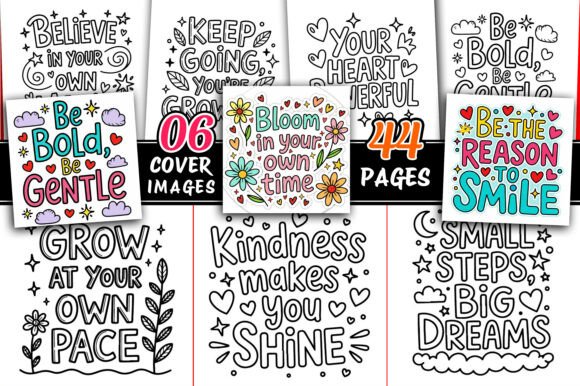
Beyond aesthetics, practical workflow factors influence whether this resource integrates smoothly into existing projects. The inclusion of six cover images alongside 44 interior pages addresses a common pain point: many digital packs provide interiors only, forcing users to source or design matching covers separately. Having cohesive cover art streamlines the assembly process for physical books or digital downloads.
The square format warrants specific attention. While visually distinctive, it does not fit standard document envelopes or traditional bookshelf dimensions as easily as letter-size pages. Users planning physical distribution should verify packaging compatibility. Conversely, for digital-only distribution or print-on-demand services that support trim sizes, the square format offers shelf differentiation.
File organization also matters. With five format types per image, proper asset management prevents clutter. Users should establish a folder hierarchy (e.g., separating print-ready PDFs from editable vectors) before beginning projects. Those unfamiliar with vector editing software should note that while SVG/EPS files offer flexibility, they require tools like Adobe Illustrator, Affinity Designer, or free alternatives like Inkscape to modify. Raster formats (JPG/PNG) remain universally accessible for immediate use.
Making an Informed Selection
Bold - Easy Inspirational Coloring Pages fill a specific gap between children’s activity sheets and demanding adult art therapy books. They prioritize accessibility, modern aesthetics, and technical versatility. For users evaluating options, the key questions are not about quality—which is consistent across formats—but about alignment with intended use.
If the priority is stress-free engagement, marker compatibility, senior accessibility, or digital adaptability, this style offers distinct advantages over intricate alternatives. The cosmetics theme adds niche relevance for beauty-focused audiences, while the comprehensive file package supports both casual hobbyists and commercial creators. However, those seeking deep meditative immersion, advanced shading practice, or standard letter-size formatting may find better alignment elsewhere.
Ultimately, the value lies in matching the tool to the task. By understanding the tradeoffs between bold simplicity and intricate detail, users can select resources that genuinely support their creative or therapeutic objectives rather than defaulting to whatever is most popular. This collection serves as a strong option for those who have found traditional adult coloring too demanding or aesthetically misaligned with their interests, offering a middle path that respects both adult sensibilities and the need for accessible creativity.