White Peony Eucalyptus Gold Pattern: A Practical Asset for Botanical Design
The intersection of fine art aesthetics and functional surface design is a critical space for modern creators, particularly those working in the wedding, stationery, and home décor sectors. The White Peony Eucalyptus Gold Pattern addresses this specific niche by translating traditional oil painting techniques into a digital sublimation-ready format. Unlike flat vector florals that dominate the mass market, this design utilizes a painterly impasto style to create depth and texture. For professionals evaluating assets for print-on-demand products, fabric yardage, or branding collateral, understanding the technical and aesthetic nuances of this pattern is essential for determining its viability in high-end commercial applications.
Aesthetic Composition and Visual Hierarchy
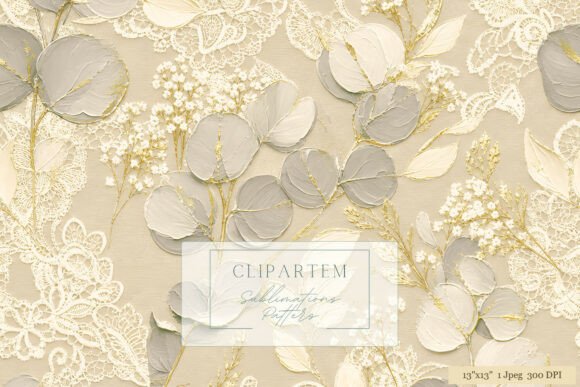
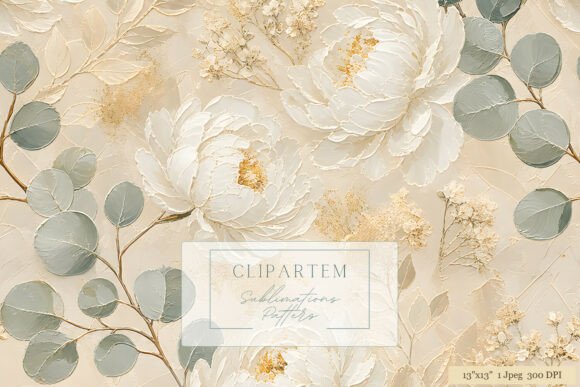
The primary strength of the White Peony Eucalyptus Gold Pattern lies in its sophisticated color story and compositional balance. The design avoids the high-contrast saturation often associated with digital florals, opting instead for a refined neutral palette. The background is a warm cream with a subtle painted canvas quality, which serves as an effective base for text overlay without sacrificing visual interest. This texture mimics linen or heavy cotton, providing an organic foundation that grounds the botanical elements.
The focal points are oversized white peony blooms rendered with thick brushwork simulation. These are not merely outlined shapes; the layered petals catch warm golden highlights at their centers, creating a sense of volume and light source consistency. This champagne gold accentuation is restrained enough to remain elegant rather than gaudy, a crucial distinction for luxury markets. Supporting foliage includes soft sage and dusty blue-green eucalyptus branches with rounded leaves that arc gracefully across the composition. The addition of tiny cream gypsophila (baby’s breath) adds necessary negative space and airy texture, preventing the dense floral clusters from feeling visually heavy. This interplay between the bold impasto peonies and the delicate filler flowers creates a rhythm that guides the eye naturally across the seamless repeat.
Technical Suitability for Sublimation and Print
For designers utilizing this asset for sublimation or direct-to-garment printing, the technical execution of the White Peony Eucalyptus Gold Pattern offers distinct advantages. Sublimation ink can sometimes appear flat or overly vibrant on polyester substrates. However, the inherent texture and muted tonal range of this design help mitigate common printing issues. The warm ivory and off-white tones blend seamlessly with unbleached or natural-toned bases, while the gold accents retain definition without bleeding into adjacent colors.
The seamless nature of the pattern is engineered for versatility across varying scales. When applied to small-format items like phone cases or mugs, the scale allows for multiple complete motifs, ensuring the product looks intentional regardless of placement. Conversely, when scaled up for wallpaper murals or fabric yardage, the impasto texture maintains integrity without pixelation, provided the source resolution is adequate. The "handcrafted" feel is preserved even in digital reproduction because the brushstroke details are baked into the raster data rather than applied as a superficial overlay. This reliability makes it a safer choice for bulk production runs where consistency is paramount.
Commercial Applications and Market Fit
Evaluating the commercial potential of this pattern requires looking at current trends in the bridal and premium lifestyle sectors. The mood is undeniably serene and romantic, positioning it squarely within the wedding industry. However, its utility extends beyond seasonal nuptial aesthetics. The neutral colorway ensures longevity in home décor collections, where trend cycles favor timeless elegance over fleeting fads.
- Wedding Stationery and Invitations: The warm cream background provides excellent contrast for dark grey or metallic foil typography. The pattern works effectively as a full-bleed backdrop or as a border element where the eucalyptus branches frame central text.
- Textiles and Soft Goods: Throw pillows, tote bags, and table linens benefit from the tactile illusion of the impasto style. The design hides minor wrinkles or fabric imperfections better than solid colors or geometric prints due to its organic complexity.
- Packaging and Wrapping Paper: For boutique brands, this pattern elevates unboxing experiences. The gold accents photograph well in social media content, adding perceived value to the product inside.
- Digital Templates: For Canva or Procreate users, this pattern serves as a high-quality reference or background layer. It is particularly useful for creating mockups that require a sophisticated, non-distracting botanical theme.
Strengths in Branding and Product Development
From a product development perspective, the White Peony Eucalyptus Gold Pattern solves a common problem: finding floral assets that feel expensive. Many stock patterns suffer from repetitive symmetry or artificial coloring that signals "cheap" to consumers. This design’s asymmetry and color grading mimic human artistic intervention. For entrepreneurs building a brand identity around slow living, artisanal quality, or botanical wellness, this pattern aligns with those values visually. It communicates craftsmanship without requiring the expense of commissioning a custom oil painting.
Furthermore, the versatility of the color palette allows for easy coordination with other assets. The sage green and muted teal tones act as neutrals themselves, pairing effortlessly with terracotta, charcoal, navy, or blush pink. This flexibility reduces the need for multiple pattern variations, streamlining inventory and design workflows for small business owners managing extensive SKU lists.
Practical Considerations and Limitations
While the White Peony Eucalyptus Gold Pattern is highly effective for specific use cases, objective evaluation reveals limitations that professionals must consider. The intricate detail and texture that define its beauty also impose constraints. Because the design relies on subtle shading and fine brushwork, it may not reproduce well on low-resolution printers or coarse, uncoated papers. The gold accents, in particular, require precise color management; on standard CMYK office printers, these may render as muddy yellow rather than shimmering champagne. Users should always request or perform test prints before committing to large-scale production.
Additionally, the density of the pattern requires careful cropping for certain applications. While seamless, placing a text box directly over a complex peony bloom can reduce legibility. Designers must plan layouts that utilize the negative space created by the eucalyptus and gypsophila elements. This is not a "set it and forget it" background; it demands thoughtful composition to maintain its elevated aesthetic.
There is also a stylistic boundary to observe. This pattern is inherently feminine and traditional. It is unlikely to suit brands targeting minimalist, industrial, or avant-garde demographics. Attempting to force this aesthetic into a mismatched brand identity will result in disjointed marketing materials. It performs best when the surrounding typography and layout echo its softness and refinement—think serif fonts, ample whitespace, and matte finishes.
Evaluating Long-Term Value for Creators
For freelancers, educators, and publishers, the decision to license or purchase this asset should be weighed against its reusability. The White Peony Eucalyptus Gold Pattern offers significant long-term value because it transcends specific holidays. While perfect for Valentine’s Day or spring collections, its neutral warmth makes it appropriate for autumn and winter contexts when paired with darker coordinating elements. This seasonality extends the asset's lifecycle, improving return on investment compared to trend-specific graphics.
In educational settings, such as art therapy workshops or botanical illustration classes, this pattern serves as an excellent study reference for texture and color mixing. The visible brushstrokes provide a roadmap for students learning to translate physical media into digital formats. For scrapbooking and journaling communities, it offers a premium backdrop that enhances personal projects without overwhelming handwritten content.
Ultimately, the White Peony Eucalyptus Gold Pattern represents a mature approach to surface design. It prioritizes atmosphere and texture over graphic simplicity, catering to an audience that values nuance. Whether used for a luxury wedding invitation suite, a line of sustainable home textiles, or a digital planner template, its success depends on respecting its painterly origins. Professionals who leverage its strengths—while acknowledging its technical requirements for reproduction—will find it to be a reliable, versatile component in their creative toolkit. The combination of lush white peonies, sage eucalyptus, and gold accents on a linen-textured background is more than just a decorative motif; it is a functional design solution for conveying understated luxury in a saturated market.